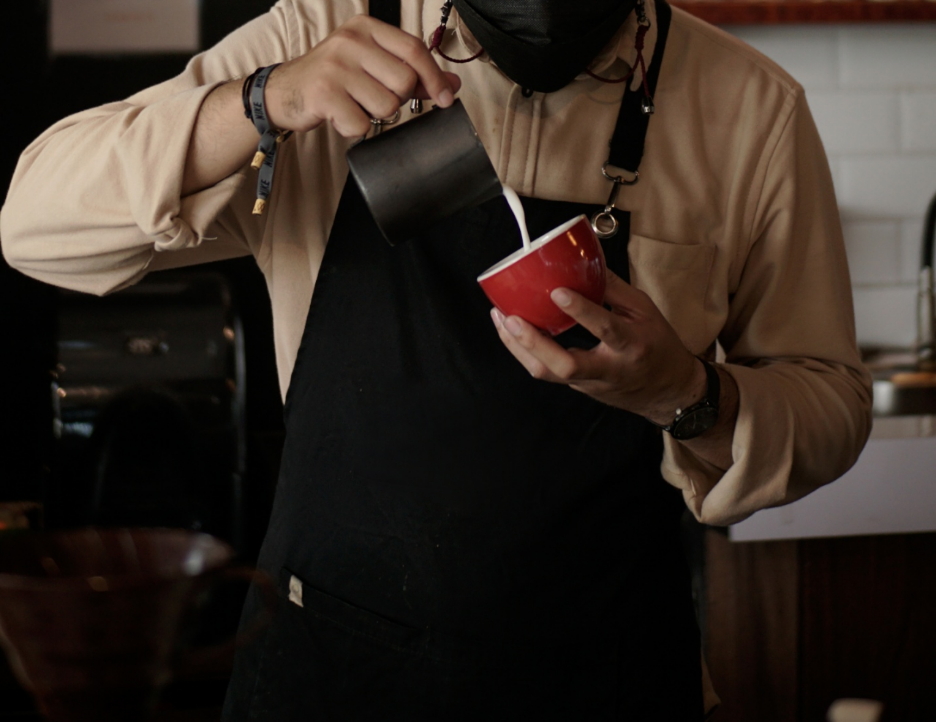
Custom aprons with logo give business uniforms a useful branding purpose while still supporting real staff work. A good apron protects clothing, keeps small items within reach, and places the company name where customers can see it during service. This matters for cafés, bakeries, restaurants, salons, florists, retail counters, catering teams, and event staff because customer-facing teams need to look organized without wearing stiff or uncomfortable uniforms. The strongest apron choice depends on work setting, fabric quality, logo method, pocket layout, strap comfort, and washing needs.
The best custom apron with logo is not always the boldest or most expensive option. It is the one that fits the staff member properly, presents the logo clearly, and lasts through repeated use. A low-quality apron can fade, wrinkle badly, pull at the neck, or make the logo look uneven after laundering. A better apron feels comfortable during long service hours, keeps the design readable, and supports the business image without making the uniform look crowded.
Why Custom Aprons with Logo Help Business Branding
Custom aprons with logo work well because they place branding inside real customer interactions. Staff wear them while taking orders, preparing products, packing purchases, serving guests, or helping customers at counters. The logo appears naturally during service, which gives the business repeated visual exposure without needing extra signage or heavy promotional material. This is especially useful for small and mid-sized businesses that want a cleaner staff appearance without moving into full uniforms.
A custom logo apron also helps customers identify staff faster. In busy service spaces, customers should know who can help them without guessing. A branded apron creates that visual cue while still giving staff practical coverage and storage. This matters in food service, salons, pop-up shops, trade booths, workshops, and retail spaces where staff may wear different shirts but still need a consistent business look. Custom aprons logo placement should feel professional rather than forced. A logo that is too large can make the apron look like a giveaway item instead of staff workwear. A logo that is too small can disappear from normal customer distance. The most effective custom apron design uses balanced size, clear contrast, and placement that stays visible when the apron is worn, not only when it appears on a flat digital proof.
Choosing the Right Apron Style, Fabric, and Logo Method
A custom apron with logo should begin with the staff task. Food prep teams may need more coverage and washable fabric. Servers may need lighter waist aprons with pockets. Baristas, florists, makers, and stylists may need cross-back straps that reduce neck strain during long hours. Event teams may need custom printed aprons that display campaign artwork clearly for a shorter period. The right apron style should support the work before it supports the design.
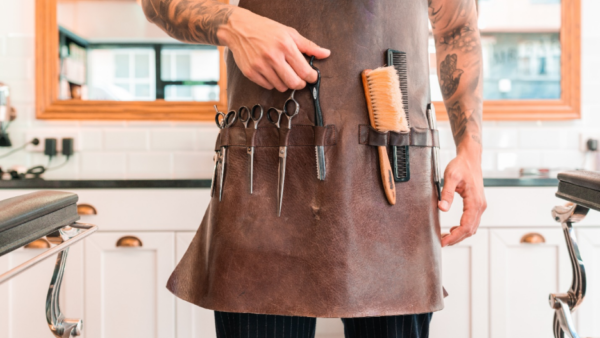
Fabric quality changes how the apron feels and how the logo appears. Cotton feels comfortable and works well for lighter service use, though it may wrinkle or stain faster. Canvas offers stronger coverage for hands-on work and often pairs well with embroidery. Denim can create a relaxed, premium look for cafés, barbers, studios, and creative retail spaces. Polyester blends can help with stain resistance and quicker drying, which may suit teams with frequent washing needs.
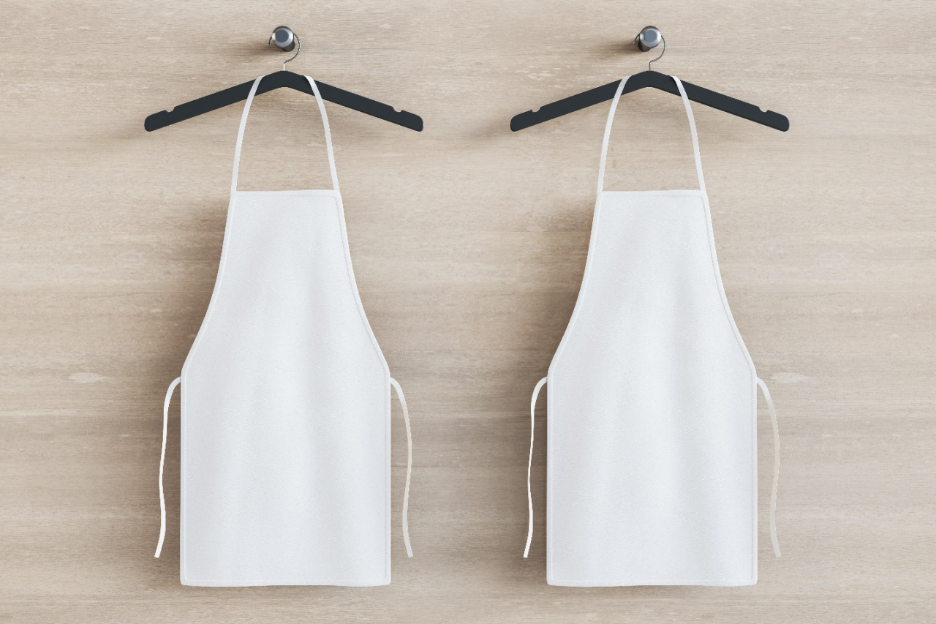
Logo method should match the artwork and fabric. Custom printed aprons are useful for colorful graphics, larger artwork, seasonal branding, and designs with small details. Custom embroidery aprons are stronger for simple logos, initials, business names, and uniforms that need a polished stitched finish. A detailed mark with gradients may print better, while a simple wordmark may look better embroidered on canvas or denim. Forcing a complex design into embroidery can make the logo hard to read, especially at a small size.
Comparing Common Custom Apron Options
The table below shows how different apron types serve different business needs. Buyers should compare these options by coverage, comfort, logo visibility, and day-to-day use rather than appearance alone.
| Apron Type | Best Fit | Logo Area | Practical Advantage |
| Bib apron | Cafés, bakeries, kitchens, retail counters | Upper front panel | Offers strong coverage and clear customer-facing branding |
| Waist apron | Servers, cashiers, concession teams, event staff | Lower front or pocket area | Supports movement while keeping small items within reach |
| Bistro apron | Restaurants, catering teams, hospitality staff | Lower front panel | Creates a cleaner service look with longer lower-body coverage |
| Cross-back apron | Baristas, florists, makers, stylists, long service hours | Upper front panel | Reduces neck strain and supports extended wear |
| Canvas apron | Workshops, food prep teams, florists, craft businesses | Chest or center front | Gives stronger fabric support for frequent hands-on use |
Bib aprons usually give the best visibility because the logo can sit on the upper front panel. This works well when staff face customers across counters or service stations. Waist aprons provide less imprint space, but they work better for fast-moving staff who need pockets and lighter coverage. Bistro aprons create a more refined customer-facing appearance for restaurants and catering teams, while cross-back aprons can improve comfort for staff who wear aprons across full workdays.
Custom aprons with logo and pockets need careful placement because storage areas can compete with branding. If the logo sits too close to a pocket seam or fold, the design may look cramped when the apron is worn. A clean layout usually places the logo above the pocket area or uses a smaller mark near one side. The pocket layout should support the job without making the apron front look overloaded.
What Buyers Should Check Before Production
A custom apron order should be reviewed as workwear, not as a flat product mockup. A proof may look fine on screen, but the final apron can appear awkward if the logo sits too low, crosses a seam, or loses contrast against the fabric. Businesses ordering customized aprons with logo should check fit, fabric, artwork, placement, and wash needs before approving production.
- Review the logo at actual imprint size so tiny lettering, thin lines, and spacing issues can be caught before production.
- Check that the logo color has enough contrast against the apron color under normal indoor lighting.
- Confirm that pockets, seams, straps, folds, and stitching do not interfere with the logo area.
- Match the decoration method to the artwork, since detailed graphics often print better and simple logos often stitch better.
- Choose apron fabric based on staff movement, washing frequency, stain exposure, and comfort during long wear.
- Ask for a clear proof using the selected apron style rather than a generic blank template.
These checks help prevent common ordering problems, such as unreadable logos, uncomfortable straps, weak fabric, or pockets placed in the wrong area. They also reduce the chance of paying for aprons that look acceptable in a mockup but fail during daily service. A custom apron design should be judged by how it looks on staff during work, not only by how polished the artwork file looks.
Best Uses for Custom Printed Aprons and Embroidered Aprons
Custom printed aprons are a strong option for businesses that need bold color, event graphics, campaign messaging, or detailed artwork. Printing can reproduce artwork with more visual detail than embroidery, especially when the logo includes gradients, small icons, or several colors. It also works well for product launches, seasonal uniforms, food stalls, trade events, school fundraisers, and larger staff groups that need matching aprons at a practical cost.
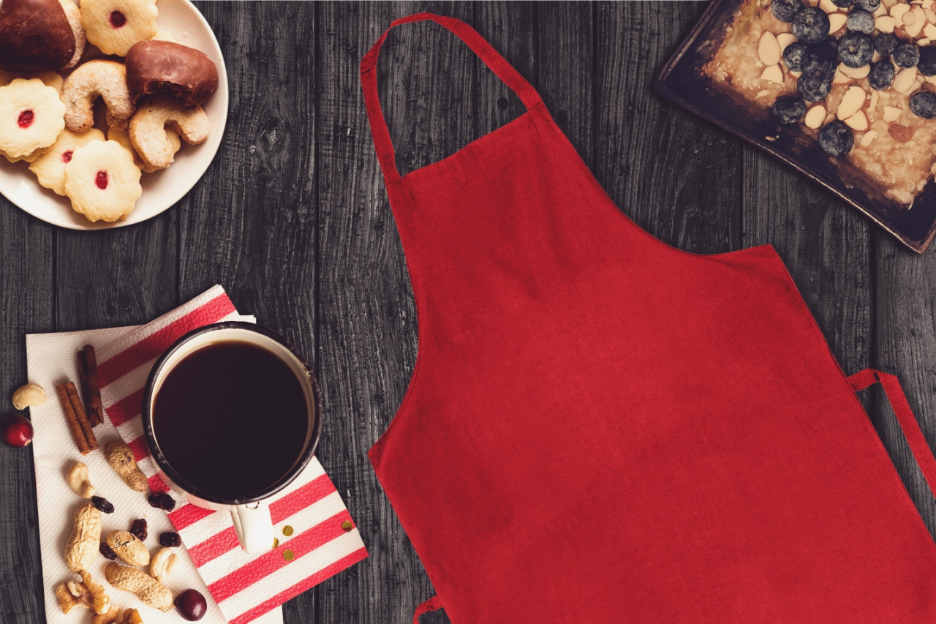
Custom embroidery aprons suit businesses that want a cleaner uniform finish. Embroidery can make simple branding feel more permanent, especially on heavier cotton, denim, or canvas. It is often a good fit for cafés, salons, barbers, florists, boutique retailers, hospitality teams, and premium service businesses. The artwork should stay simple, because tiny lettering and complex illustrations may lose clarity when stitched.
- Use custom printed aprons for colorful artwork, larger designs, event teams, seasonal branding, and detailed graphics.
- Use custom embroidery aprons for simple logos, staff uniforms, initials, wordmarks, and a more polished finish.
- Use custom aprons with logo and pockets when staff need pens, slips, gloves, clips, receipts, or small service items.
- Use darker apron colors when stains are likely, but keep enough logo contrast for clear readability.
- Use adjustable straps when different staff members will wear the same apron style across long service hours.
A business may also use more than one apron style for different teams while keeping the branding consistent. Kitchen staff may need bib aprons, servers may need waist aprons, and front-of-house leads may need bistro aprons. The program can still look unified if apron color, logo style, and decoration method remain consistent across the group.
Final Thoughts
Businesses planning branded staff wear need aprons that look professional and hold up during real work. The logo matters, but so do fabric quality, pocket placement, strap comfort, washing needs, and the way staff move during service. A café may need bib aprons with clear front branding, while a catering team may prefer bistro aprons for a cleaner customer-facing look. Custom Apron helps businesses choose aprons that fit their staff, setting, and branding needs. With the right style, printing or embroidery method, and logo placement, branded aprons can feel like part of the uniform rather than a rushed promotional item. The result is practical workwear that keeps the business name visible during daily customer interaction.

Leave a comment